All aboard! We were on board, along with about 400 other people, when the famous Herradura Tequila Train left the Guadalajara Train Station at 11:00 on Saturday, Feb 15. This train makes the trip from Guadalajara to the Herradura Tequila Distillery in Amatitan, Mexico every Saturday. You can choose from tickets for the Premium Car, the two First Class Cars, or six or so Premium Cars. We chose First Class tickets, and it was a good choice. Here is a map of our train journey:
We traveled by car from Ajijic, leaving at 8:45 am. We walked to Black Coffee, our meeting place, which has been our usual practice for these Charter Club Tours, with the walk taking about 35 minutes. A driver picked us up there, and we were off on the 1 hour drive to the train station in Guadalajara.
Once at the train station, we checked in, went through security, boarded, and prepared for the fun of the day — a long day!
 |
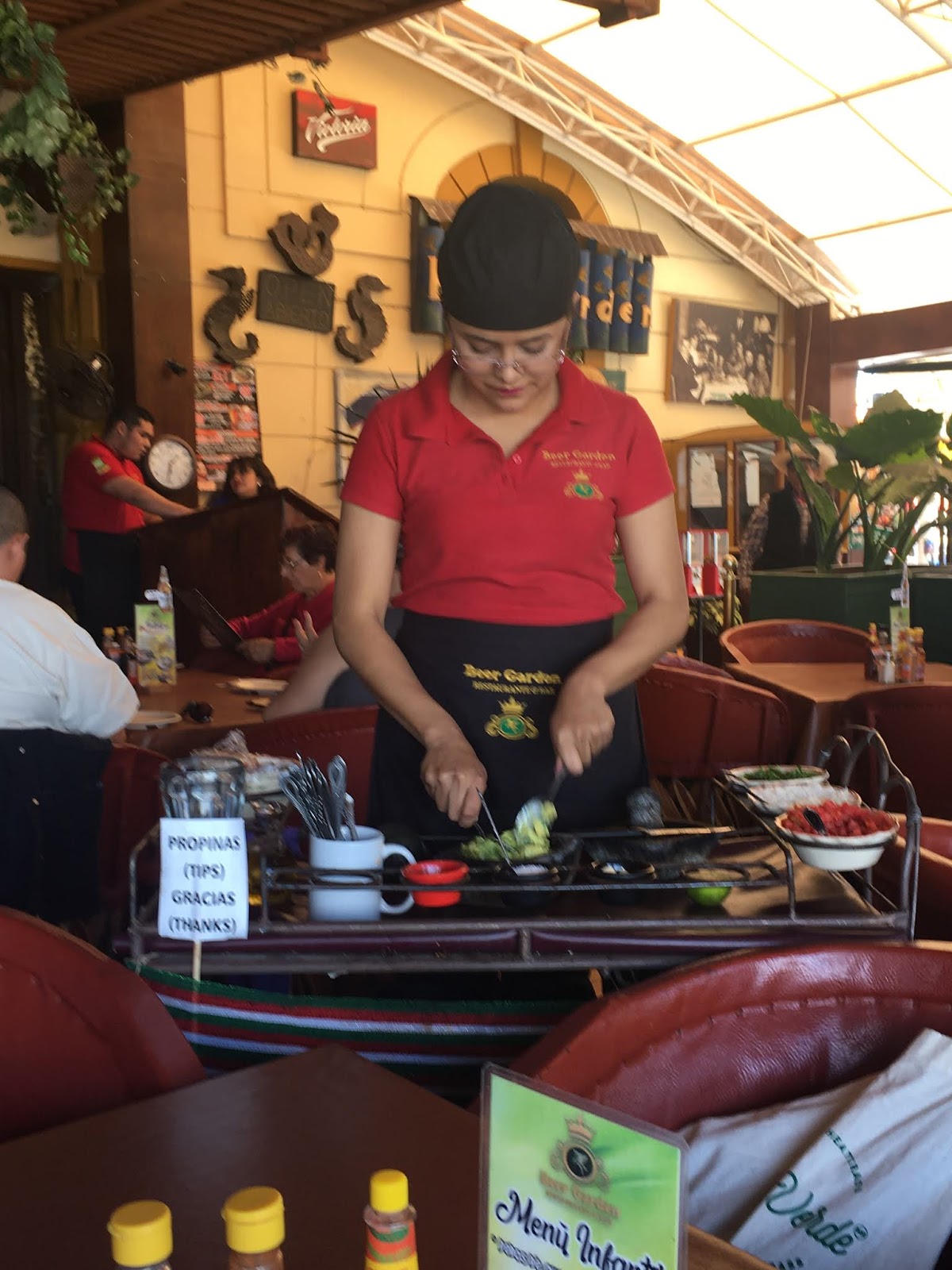
| Our car had a bar, with table side service, and all the tequila drinks, flavored or straight, were “free.” |
 |
| This was my favorite mixed drink, a mixture of tequila, Greek yogurt, and cucumber juice, as well as cucumber slices. |
 |
| This one was good too, whatever it was. The two young women at our table (they were from Jersey) also ordered straight shots of blanco tequila to mix in with these drinks, which weren’t quite strong enough for them. Admittedly, on the way home, I got a couple of straight shots and poured it in too. . . . |
When we weren’t enjoying the tequila drinks (first class servers too), we could look at the views outside the windows.
 |
| A view of our train as it rounded a bend |
 |
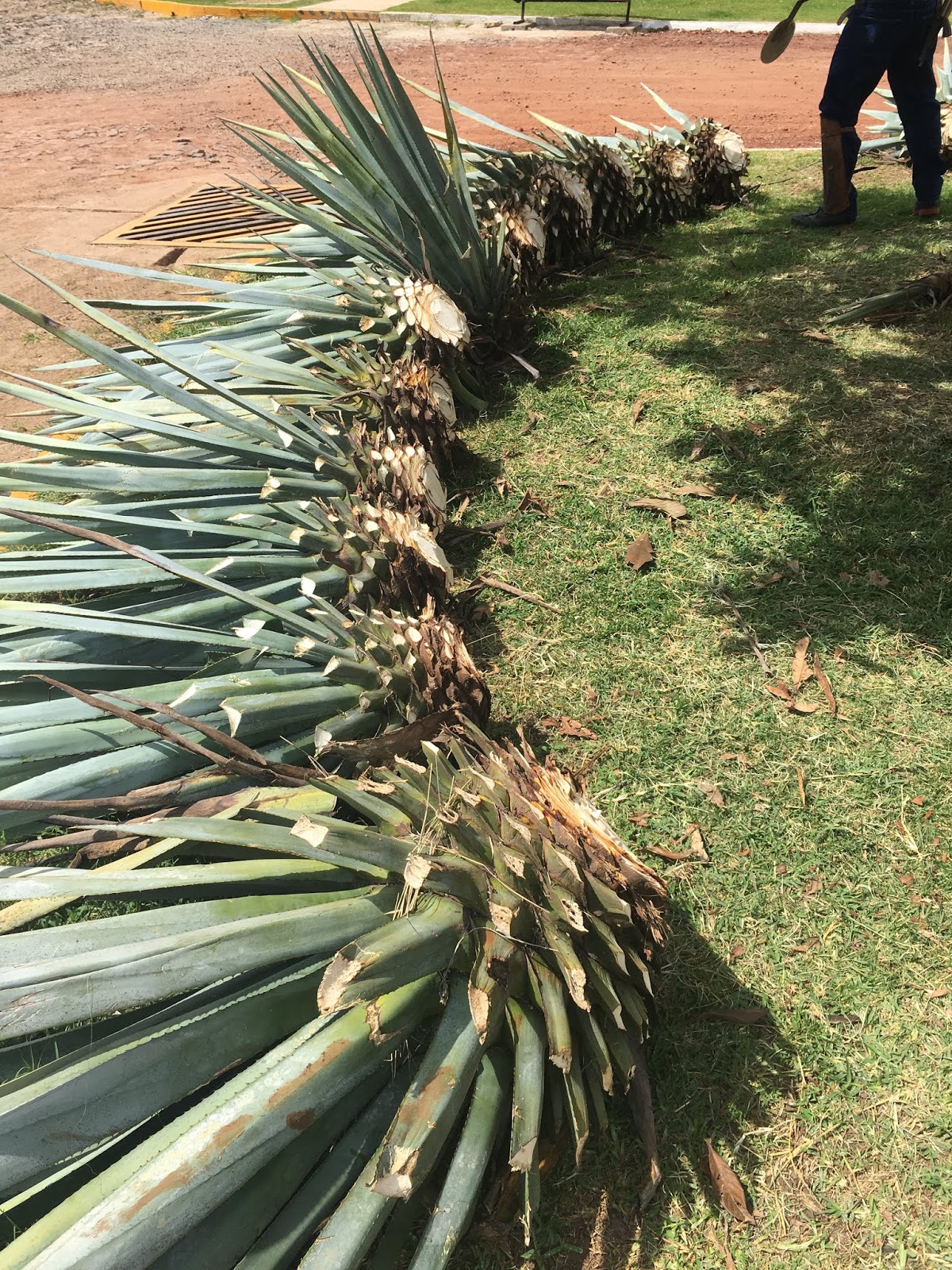
| Recently clipped blue agave to assure worms don’t get into the core of the plant |
 |
| That’s Mt. Tequila (with the sticking-up hump) in the background. |
 |
| Blue agave was growing everywhere, even in the ditches along the train tracks. |


Then we arrived at Amatitán and were loaded into buses for the short trip through town to the Herradura Distillery.
 |
| The horseshoe, shaped as you see it here, means average or even bad luck, but tipped upside down, as you would do when you tipped a glass with the horseshoe on it, it means good luck. Thus, if you keep tipping your glass (full of tequila, of course), you will have good luck. |
 |
| This cute guy greeted us as we entered the distillery. |
 |
| This was the original hacienda home, still privately owned. |
Next we were provided with a demonstration of how one prepares the blue agave for the distillery. We had already seen this at the Jose Cuervo blue agave farm, but the repetition was good. Once we finished with that demonstration, we walked around the distillery where the distillation process was explained, again a second time for us, but it made more sense this time because they were actually doing some distilling so we saw the action.
 |
| These bases are getting ready for tour groups. |
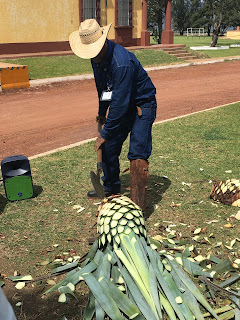 |
| First, chop off the leaves. |
 |
| Then you have a bunch of “pineapples” ready for the ovens |
 |
| They are cooked in the ovens. |
 |
| They become like mulch |
 |
| Water is added |
 |
| And it gets sent to the distillery on conveyor belts |
 |
| And it is distilled, sometimes many times. |
Okay, so that might not be 100% accurate, but you get the idea.
Once the tour was done, we were again in a tasting room, but instead of 8 people as we had as Jose Cuervo, we had about 400. It worked well though, even though not quite as professional as Cuervo’s, and we only had three tequilas to taste (not the expensive stuff).
We were still moving, this time to a huge room for a gourmet meal, with three courses all having tequila as one of the ingredients. It was ALL excellent, and despite the largeness of the crowd, very efficiently served. Actually, the same servers from our First Class car served our table :-).
 |
| The first course, a mushroom lasagna (delicious). Unfortunately, I forgot to take pictures of the other two courses. Sorry. |
While we were eating (well, close to the end of the meal), we had a couple of hours of entertainment: a wonderful mariachi band (probably the best we’ve ever heard), including the singers, dancers (three or four different dances), and more music.
 |
| A fabulous band with several outstanding singers |
 |
| First the dancers came out in white |
 |
| Then they were dressed in other colors (guys too) |
 |
| Sword dancers got in the action |
 |
| And another change of outfits |
There was more too, and all the while tequila flowed liberally (at least at our table) and, of course, there was a tequila store set up at the end of the hall, as well as several booths of other goodies to buy. No, we didn’t buy anything.
Around 5:00 we again got on our buses and took the short trip to the train station, got in our train car, same places, and had a few snacks as well as many more drinks while we took the two hour trip back to Guadalajara.
It was a long day, but it was a delight. We feel as if we know enough about tequila to last the rest of our lives, and when our driver pulled into our place, we crawled into bed and r-e-s-t-e-d.