Chapala excursion — Feb 9


A visit to the city of Chapala

We visited Ajijic’s compatriot town of Chapala which is only about two miles away to the east of Ajijic.  Chapala is the city with the governmental offices; Ajijic is a part of Chapala, so there are no city offices in Ajijic.  We went there on a Sunday afternoon and everybody else had the same idea - but we enjoyed our visit.  Thus, the town plaza was packed.  It’s also a very pretty city with a great plaza and a wonderful Malecon.


The church on the plaza.
Note the bell ringers up in the belfry.  There were about 6 of them, each one pulling a different bell cord.  I doubt they had any ear protection, and the bells were LOUD. 
The signage on the Malecon indicated that we were at the right place.
The pelicans were a draw.
When some people started to feed the pelicans, we had a crowd.
One of the many wonderful sculptures along the water on the Malecon.
Fishermen pulling in their nets.
One could walk out into the lake on a pier.
We could see another walkout.
Note the water quality.
A view of a larger-than-life fishermen statues.
Viewing the acrobats as they swing with their heads down.
Everybody gets some action!
We did a tour of a train facility that was open for only seven years.


In 1920 the route from Guadalajara to Chapala was either horses or the new train. Note the brown edges of the lake in 1920,  The current lake is the blue part.   
The train would arrive at the back of the building because the front was the water.
The frontage of the lake was in the front of the building because people would arrive by boat. The lake isn’t that close today.
We visited a garden next to the old train station.
The garden was fun - but we had to go.
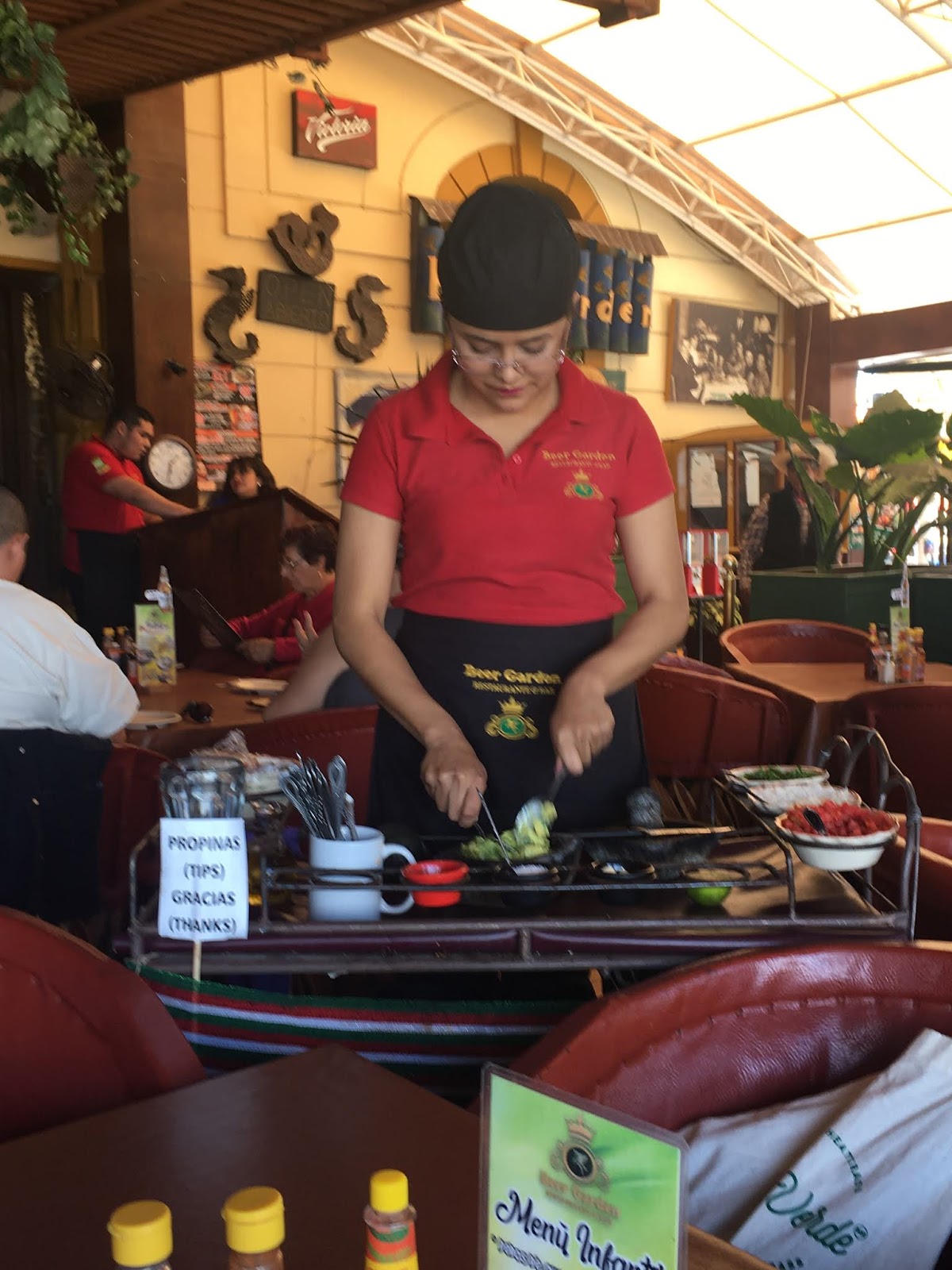
We had a nice lunch at a restaurant on the plaza.  This young woman made our guacamole at our table. 
Nummy guacamole.

We wandered a bit more after lunch, then grabbed a taxi and headed for “home” in Ajijic.  Chapala is a nice city, but I’m glad we chose Ajijic.

The Ajijic Plaza

One thing we love about old Spanish colonial towns is that they all have lovely town plazas.  On one side (or perhaps two sides), there is always a church, and another side generally has some governmental buildings.  Then there are shops and restaurants situated around the main park square.

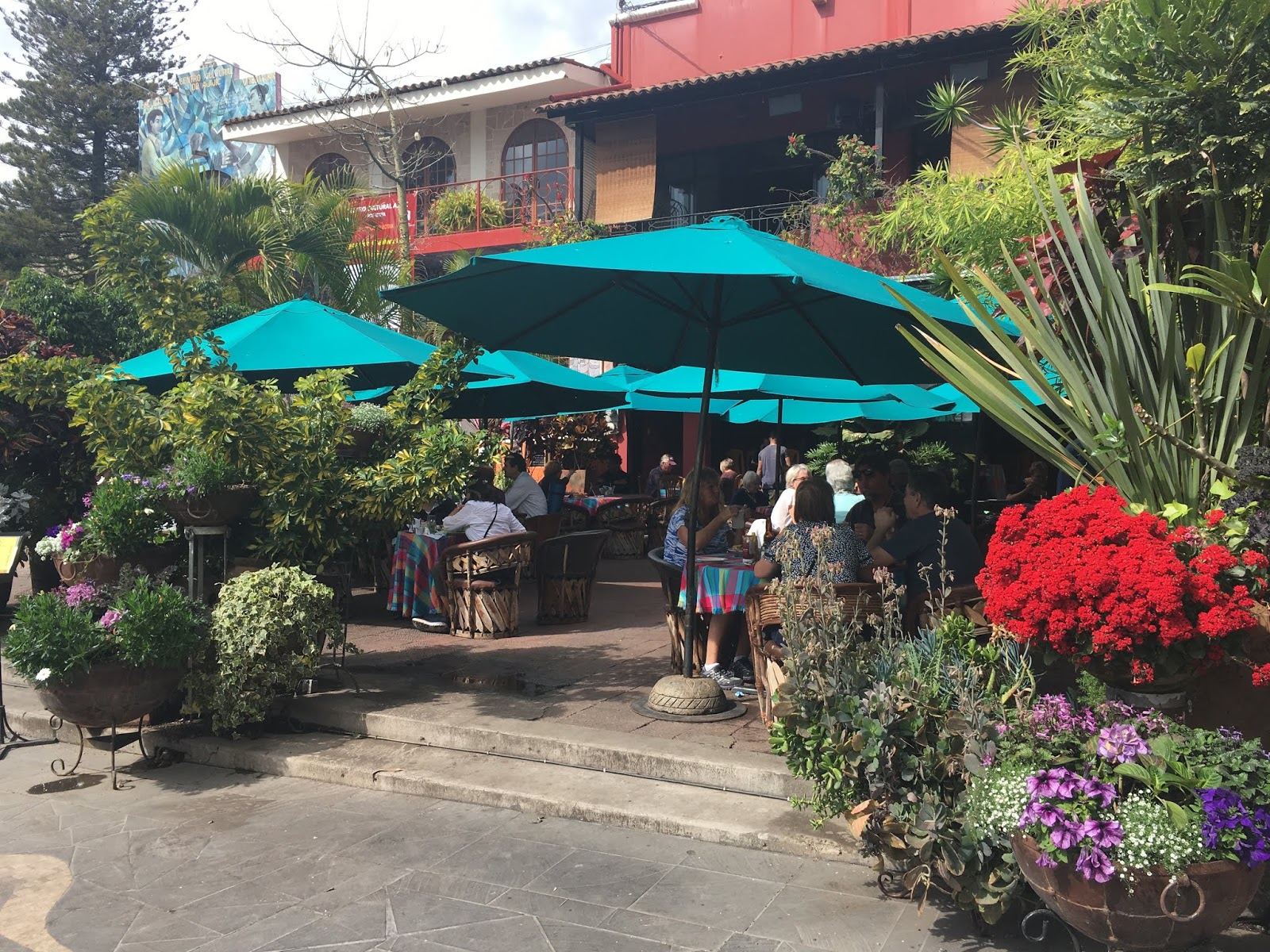
The plaza in Ajijic is no exception. It has an old church and several buildings dedicated to the arts, as well as a ton of excellent restaurants, large and small, some with outdoor seating; a coffee shop; a tremendous number of sculptures; the center “bandstand”; park benches; kids playing; people selling things; stores; . . . .  It’s a delightful place.  No government buildings though because Ajijic is really a subdivision of the community of Chapala, so the government buildings are in the Chapala town plaza.

On the weekends, you will find a lot of Latino families enjoying the space and a fair number of gringoes.  During the weekdays, the plaza is filled with ex-pats: men sitting together, women sitting together, couples sitting together, couples sitting alone — they are everywhere, and clearly, they are enjoying “the good life.”  Here are some pictures of Ajijic’s  downtown plaza.

The center of the plaza — a public grandstand
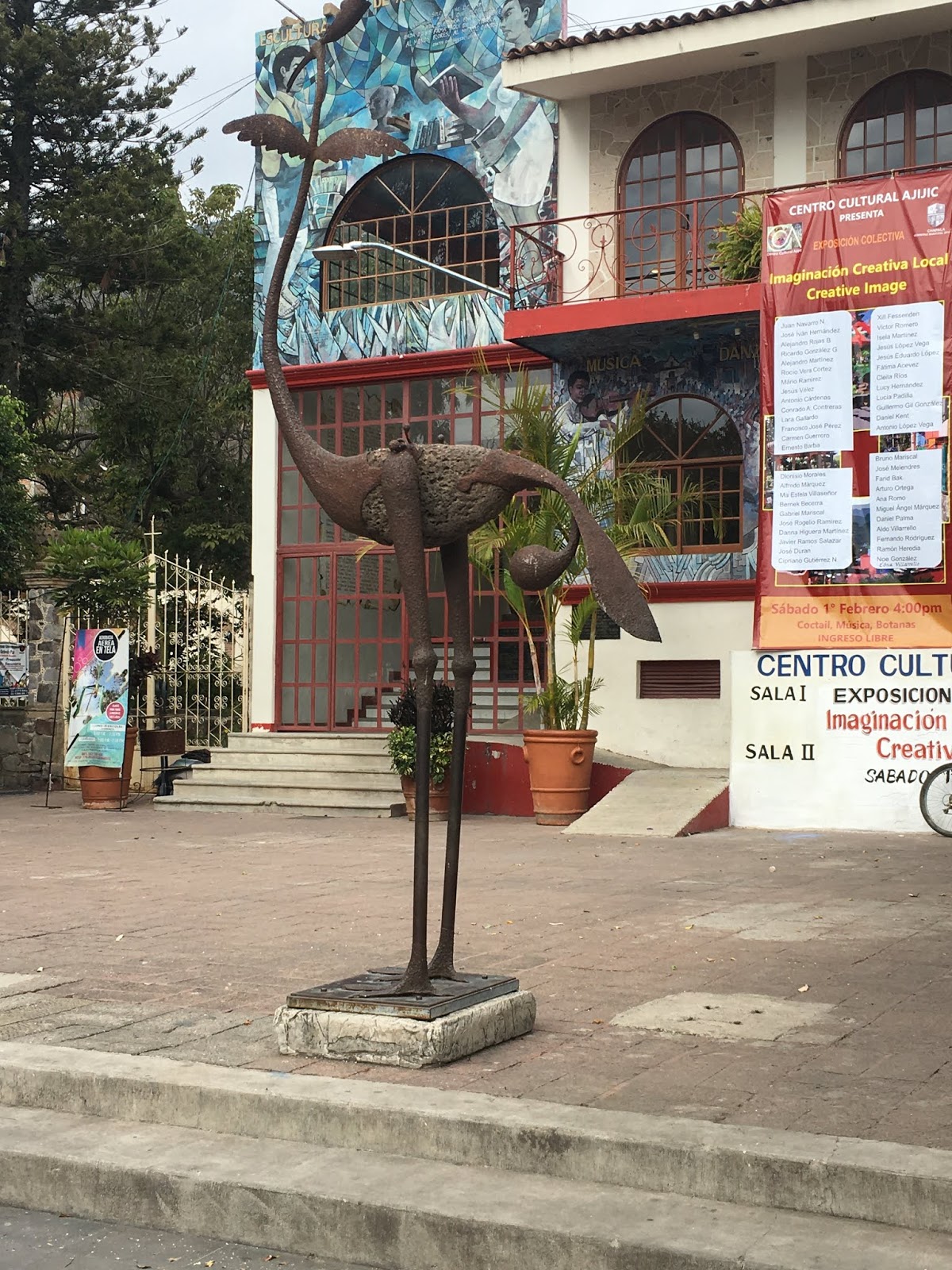
Sculptures from every possible material are everywhere


This coffee shop is always filled with ex-pats.

Another favorite ex-pat restaurant
One of the side streets is pedestrian-only and is filled with stands of local artisans.

This little side street also has a magnificent long mural, almost the length  of the street.  It is historical, with several of the leaders of Mexico’s independence represented.

And people sometimes lay items out on a blanket to sell
The Cultural Arts Center is also on the plaza.

This art center sponsors several classes, and one day, we watched several  retirees painting various scenes in the plaza. They were serious and spent several hours on their projects.
And off one of the ends of the plaza is a beautiful old church.

The Ajijic Town Plaza has become our “go to” place most every day.  There’s always something to watch, and the artisan and gringo art stores surrounding the plaza are always a delight.

A professional tequila tasting!

One of the special activities of our Tequila day tour was a stop at the Jose Cuervo tequila tasting room. We had a professional taster sit with the eight of us while we went through a series of four different kinds of tequila, exploring them with various food items designed to enhance taste or smell.


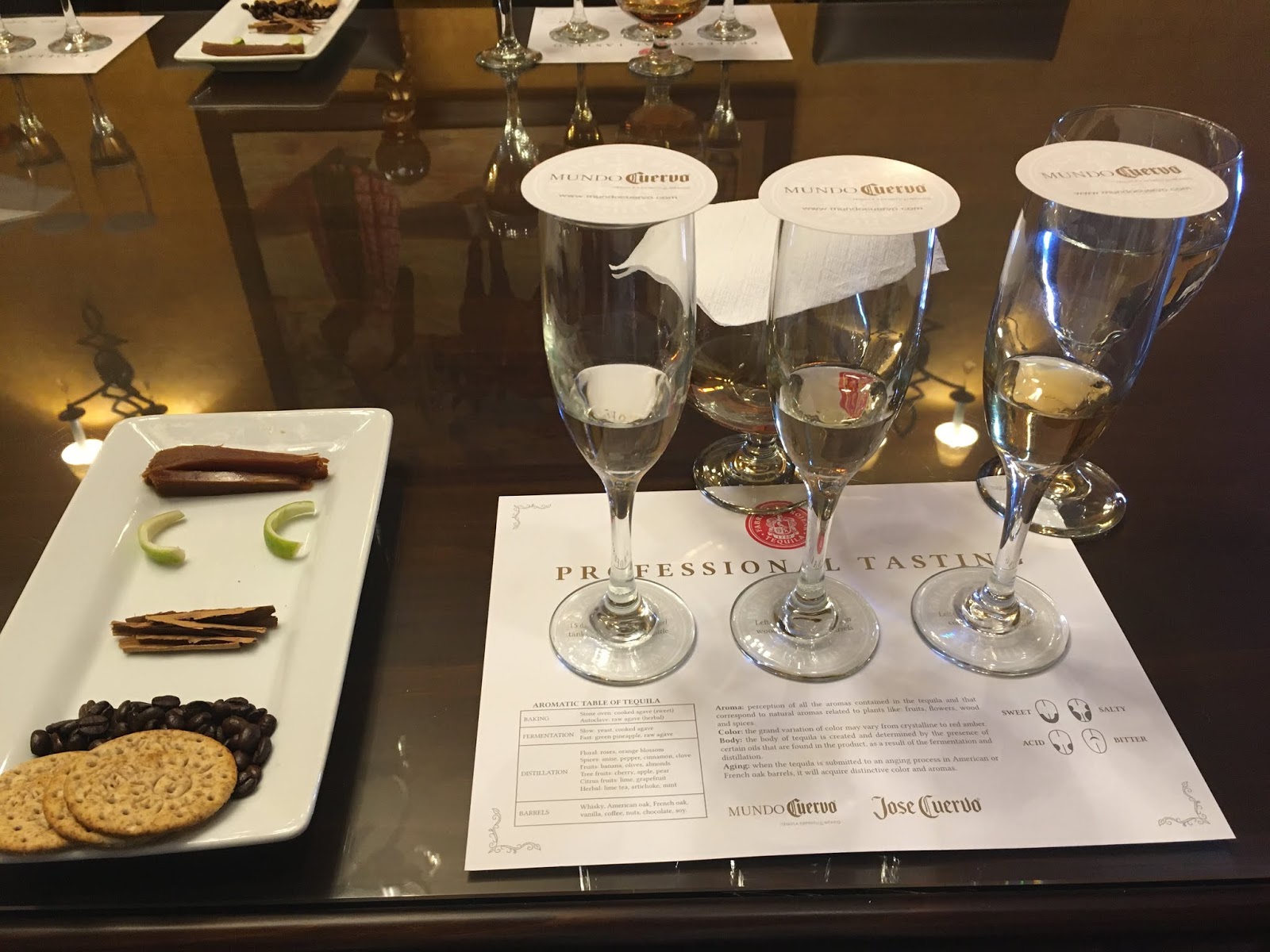
We each had a plate of crackers, coffee beans, cinnamon sticks, lime pieces, and the sweet honey chewy part of the agave plant.  Oh, we had a glass of water too to swish between the four different kinds of tequila.  The cracker was to be used for cleaning the palate too, along with the water.
We had four different kinds of tequila to taste: (1) a white tequila (the cheapest and generally used for mixed drinks like margarita) and which spent 15 days in a stainless steel container before it was bottled, (2)  a tequila that was aged for two months to one year in an oak barrel, (3) one that was aged from one year to 3 years in an oak barrel, and (4) one that was aged longer than 3 years in oak.  You can’t see the latter very well, but it’s in the back in the brandy snifter kind of glass.
We first smelled the aroma of the white tequila (no oak barrel for this one).  To get the proper aroma, you had to tip the glass sideways as much as possible with spilling it.  This allowed for the largest area of surface air over the tequila.  Then you’d bring it up to your nose smelling first the aroma at the bottom of the glass lip before smelling the aroma at the top of the lip of the glass.  The smell was different. Not sure if they use the word “bouquet” for the aroma of the tequila or not, as they do with wine.  Anyway, our guy did not use that word.

Our guide knew his tequila!
Next, we “enhanced” our sense of smell.  We took the lime sliver, and twisted it to get its flavor stronger before we brought it to our nose.  Then we tipped the glass and smelled the aroma again.  It was definitely a different aroma.


Then, we tasted the tequila.  We did this by putting a bit in the front of our mouth, swishing it through our teeth, and then swallowing.  Lastly, we put a bit of the lime in our mouth and did the taste test again to see how the taste differed.  The key was to just put a tiny bit in your mouth; otherwise, it really burned in your mouth and one the way down.  I learned the hard way!


Then we followed the same procedure with the two-month plus aged tequila, the light golden one.  This time, though, we used the sweet agave to enhance the smell and taste.

Next we used the same procedure with the one-year plus aged tequila, the one on the left in the picture.  To enhance aroma and flavor here we used the cinnamon.  We also starting looking at the “legs” of the tequila.  For this one, the legs were evident and came down in tiny rivulets, much as it does with good wine.

If you look closely, you can see the legs about a third of the way down from the top of the glass
And then came the prized tequila, the one that was aged the longest and was in the brandy glass.  We followed the same process of tipping the glass sideways, etc.  This time, for the aroma and taste enhancer, we used the coffee bean. 


One of the other members of our group doing her thing:

Here is a copy of our “professional tasting” form:

This was our first professional tasting experience, and it was educational.  Neither Harold nor Julie has the tastebuds to discriminate like the professionals can, but nonetheless, it was great fun.  And in the future, if we buy tequila, it will probably be either “rested” or “aged,” but not the expensive aged.