Ajijic — our home for a month

We have already shared pictures of our abode for this month.  As the month progresses, we are pleased with everything about it.  But now we’d like to share something about the community, past and present.

Before the arrival of the Spanish, the area was probably occupied by nomadic tribes, the Coca people who settled on the northern shore (that’s where Ajijic is).  “Ajijic” is probably an Indian place name derived from Nahuatl, the native language of the area.  In old Nahuatl, Ajijic means “place of water” or “place where water bubbles up.”  When the Spanish arrived, Don Andres Carlos and Fray Martin “founded” Ajijic in 1531 because it had a good source of water.  By 1833, the population was probably around 2000.

Some famous people have lived here, including many writers, some well-known, some lesser, and the place still has multiple writers who come, enjoy the weather, and write.  In the past, D.H. Lawrence was here where he wrote The Plumed Serpent and which apparently has some unflattering tidbits about the area.  Guessed I’ll have to read it.   In the late 1930s Somerset Maugham lived in Ajijic and finished his novel The Razor’s Edge.   And Tennessee Williams lived here in the 1940s and played poker every night at the Old Posada, apparently a real celebrity hangout in the 50s and 60s.  Some of the guests included Liz Taylor, Charles Bronson, James Coburn. But back to Williams — the poker nights inspired him to write a short story called “The Poker Game,” which eventually became A Streetcar Named Desire (from https://www.chapala.com/chapala/ojo2007/writers.html)

Not sure if anyone famous is living here now, but I would not be surprised.

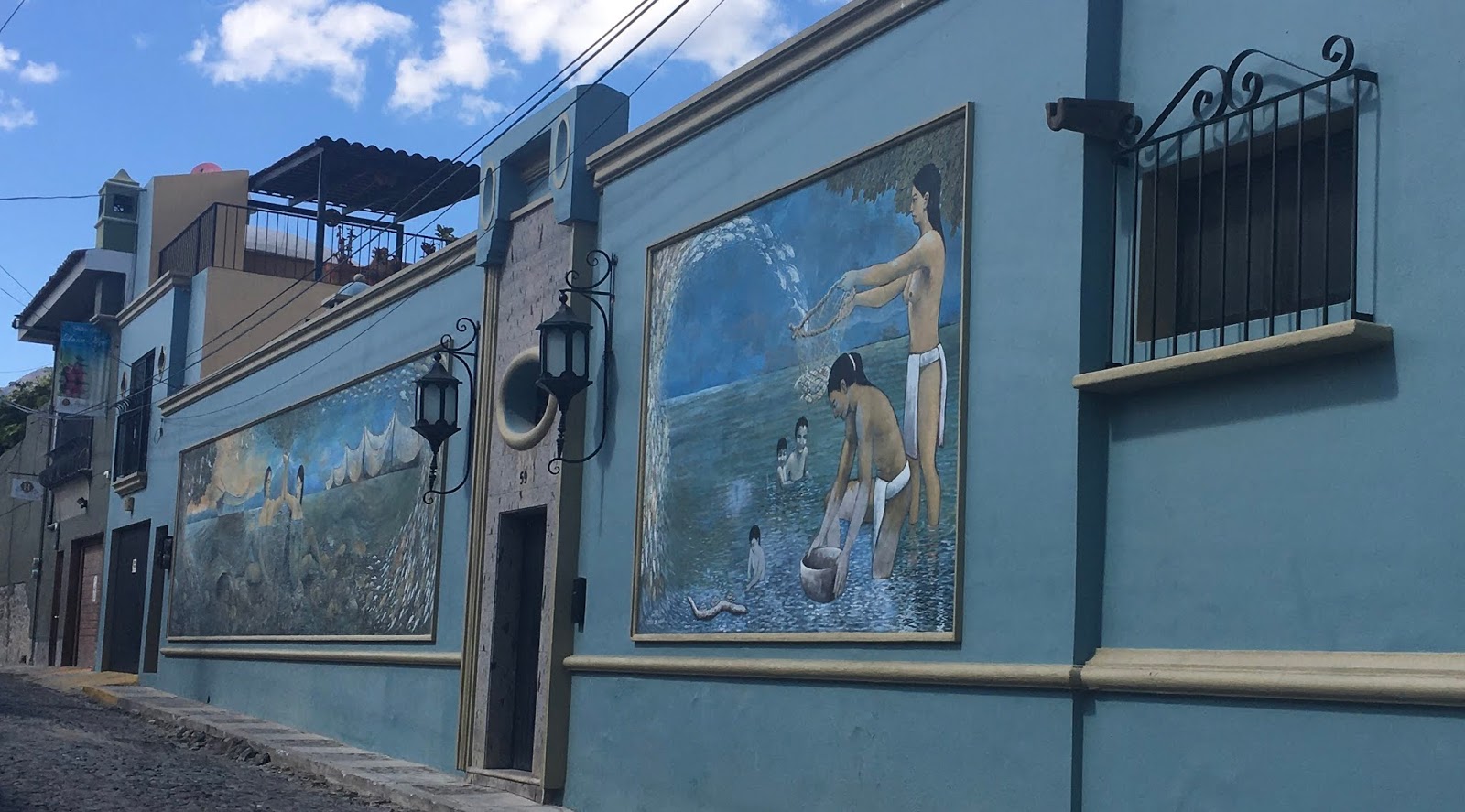
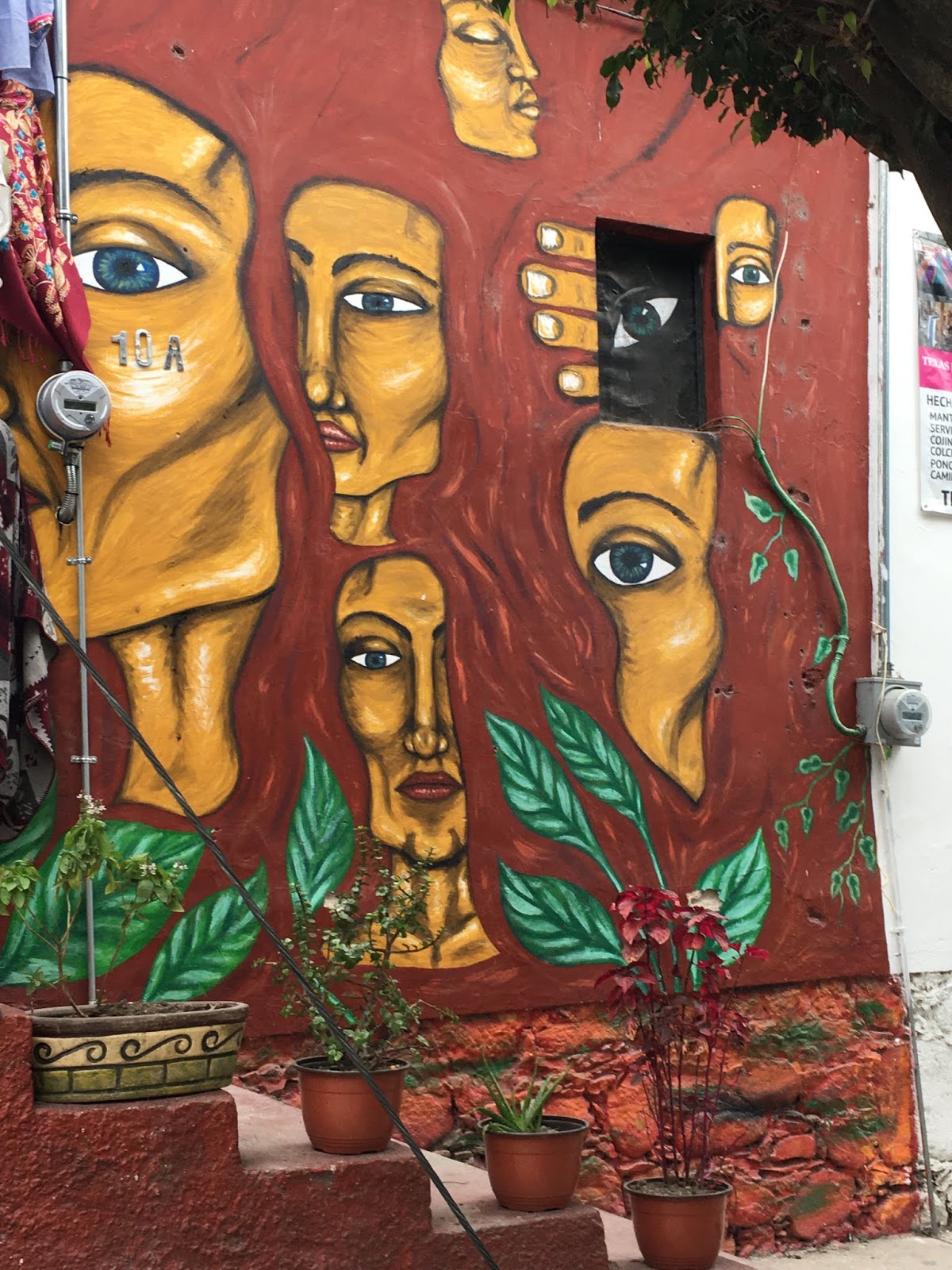
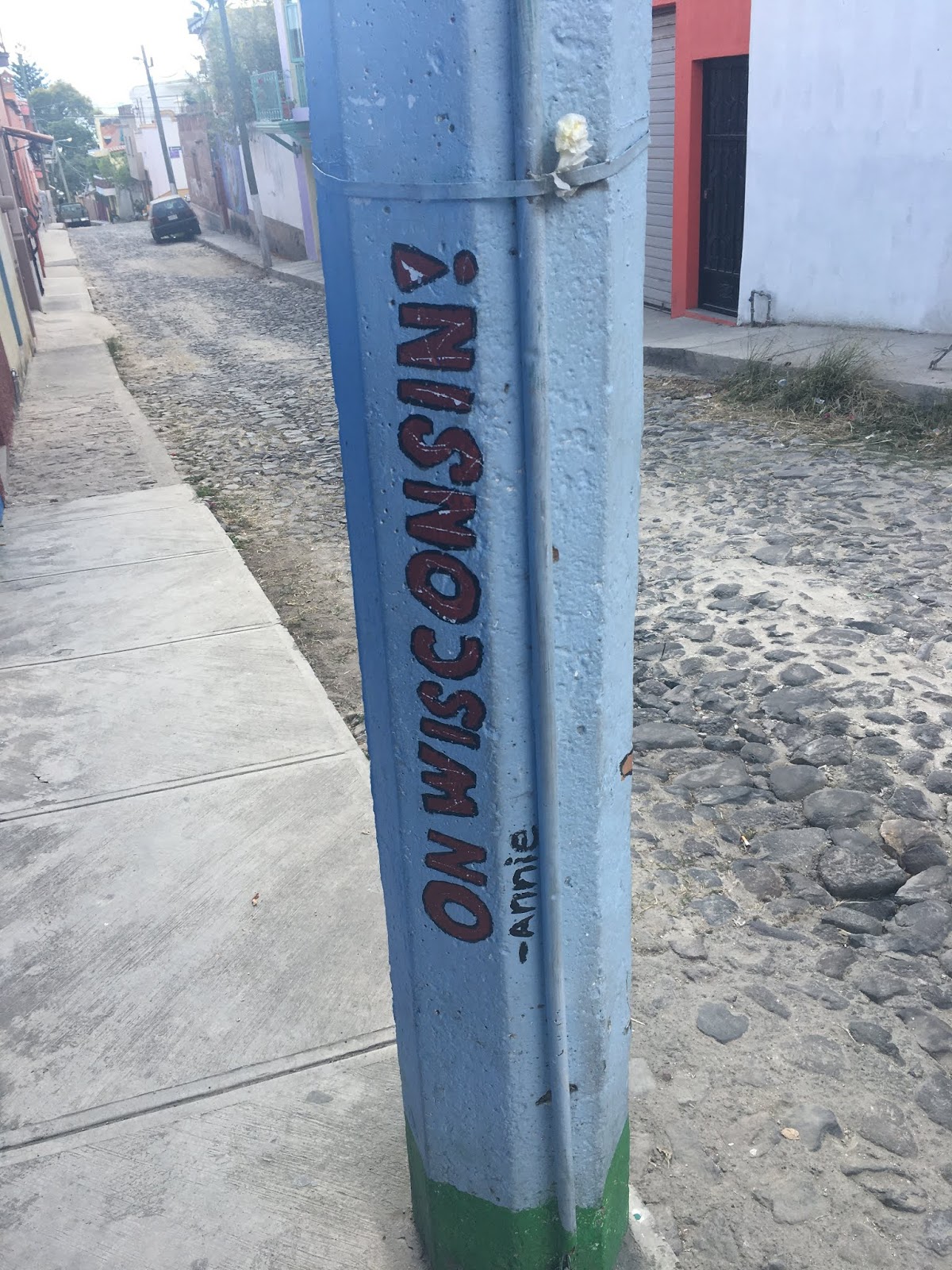
One thing that creates some of the charm of the city is the fabulous murals which are everywhere.  They all have meaning, and unfortunately, we don’t know the intent of most of them, but here are a few of the murals you will see walking down the streets.


It’s probably not a surprise that almost every street has a mural because Ajijic is known as the “arts” town for the Lake Chapala area.  Many, many streets are filled with art shops, both owned by gringos and indigenous artisans, with every kind of art imaginable.  No kitsch shops, so if you want to buy trinket souvenirs or a postcard, this is not the place.  No tee-shirts either, except for this shop:
All kinds of art classes are available also, and one day when we were having a cocktail in one of our favorite outdoor patios, we saw a group of about 8 gringoes who were painting various scenes from around the plaza.  Here are three of the painters intently working on their products:

It’s also a very clean city with trash picked up every morning, and it must be hung high on a fence or something so that the dogs don’t get into it.

Speaking of dogs, there are a few.  We have a couple in our neighborhood which do their share of barking :-(.

Speaking of things we dislike — some of the streets (both roads and sidewalks) are cobblestones, and they are very difficult to walk on.  To attest — I, who can’t remember ever falling before — fell the other night walking home in the dark.  You really must look down ALL THE TIME.  And in the words of the owner of our AirBnB, “Don’t even think about wearing flip flops.”  Happily, though, the city is working on redoing the sidewalks, and the downtown plaza area and surrounding shopping streets have all been redone.  Whew.  Here are some of the pretty, pretty streets:


The music scene is also vibrant.  A couple of the dominant locations are Perry’s Pizza (happily right next door to us) and La Bodega where several nights a week you can find local retired musicians rocking the night away.  They have sign-up sheets too, so singers (and other musicians) can join the main group for two songs: jazz singers,  blues singers, rock musicians, you name it, they are here, and many of them were professional musicians in the US (or wherever) so they are good!  Here are a few pictures from some of the music nights:


There are also places that sponsor trivia.  We went to a couple of trivia nights at the Cocktail Bar.  Great fun.  Smart people.  Good questions.  Teams of 6.  No cheating.  

And, you never know what you will see when you walk around the next corner:


The Great Chili cook-off, Feb 7

The ex-pat community here is amazingly vibrant, and one example of that vibrancy is on display at  the “Great Chili Cook’Off,” now in its 42nd year.  Yes, 42 years!  I don’t know how large the ex-pat community was 42 years ago, but at this time of year, they estimate 50,000 ex-pats live around Lake Chapala.  I think they must all come to Ajijic for the Great Chili Cook-off, actually a huge fundraiser for 11 chosen charities in the area, mostly associated with woman and children from the area.

Why do people come?  Well, certainly for the Chili (which is excellent) but there are tons of other things going on too:  lots of other kinds of food, live music from morning to night, tons of artisan craft booths, salsa and margarita competitions, raffles. You name it, they had it.  We decided to go early so we attended from 11 to 2:00 on Friday, the first day, expecting to beat the crowd.  We may have somewhat beat the crowd, but it was still packed.  It was a wonderful day, and I’m sure the entire weekend will be fun for all who attend.
The booklet, including a list of the artisans and where their booths are located.
Harold can attest that the Chili was excellent
Julie can attest that the Chili dog was excellent 
Some of the crowd
The live music was also excellent

We didn’t do this, but you could buy an entrance to a margarita and salsa competition area.
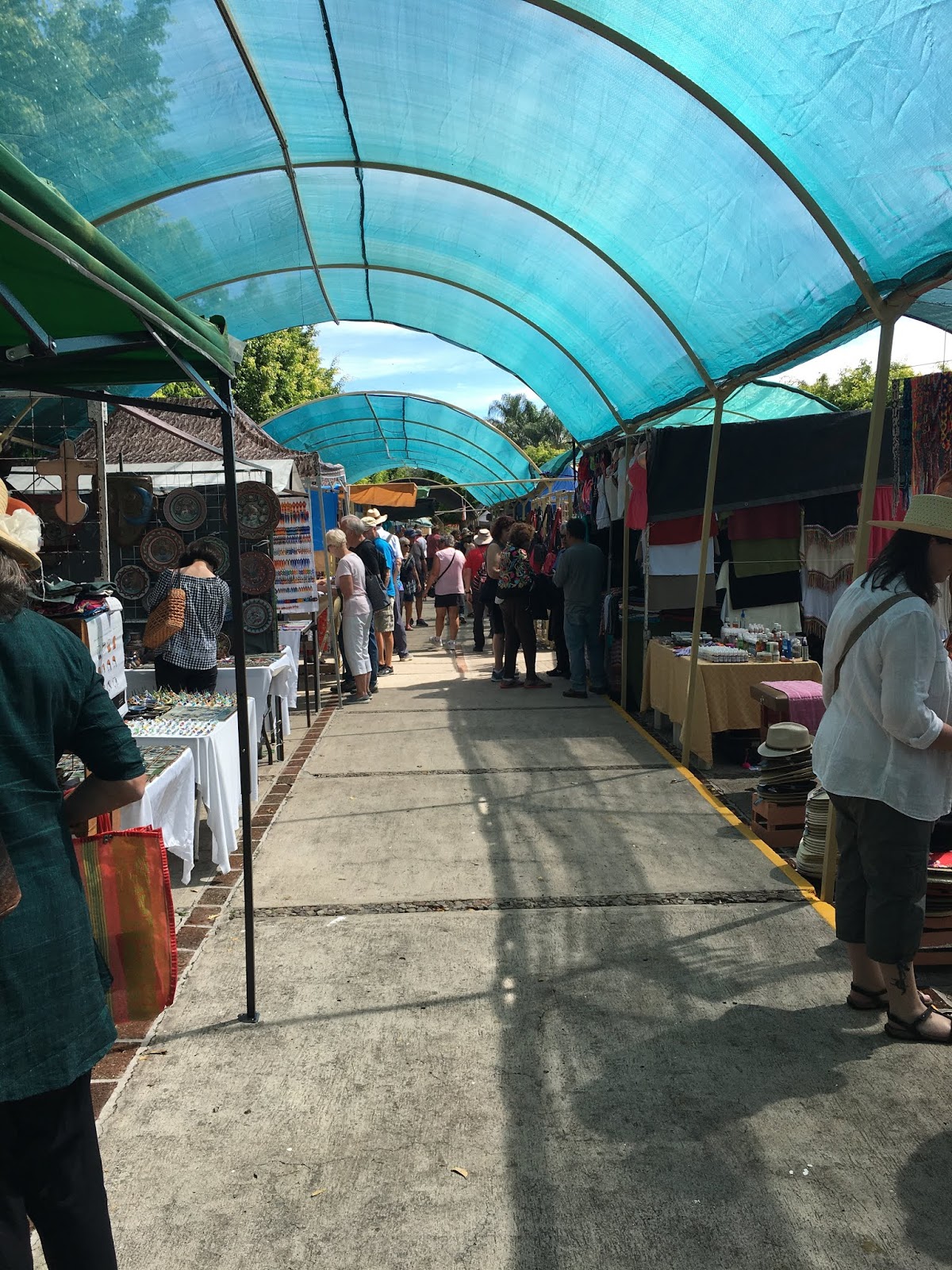
One of many rows or artisans.  Yes, we bought a few things.
Ajijic Red Cross was there too, just in case. 

Teuchitlán and Guachimontones archeological site tour — Feb 6, 2020

Another Ajijic Charter Club tour day, this time to an ancient archeological site.  Every time we visit one of these sites (and we have now been to several in Ecuador, Peru, Guatemala, and Mexico), we become more amazed at the advanced societies that thrived thousands of years ago.  The site we visited today — by the village of Teuchitlán and called Guachimontones for the Guaje trees that grow there — was equally impressive.

We’ll discuss three aspects of the tour:  (1) the society and the irrigation techniques used to grow food in chinampas, (2) the overall site with its round pyramid and the religious significance of it, and (3) the ball court at the site.  And we’ll toss in a few other tidbits too.

First, there were 10 of us on the tour, along with our guide, Herman.  He was our guide for another one of our trips too (Mazamitla), and while not the best guide in the world, he was okay.  We took the two-hour trip (on the other side of Guadalajara) to the village of Teuchitlán where the archeological site is located.  The most adventuresome part of the journey was that we took a short cut road from one highway to another, and the dirt path was muddy, one-vehicle wide, and in some places filled with water from the previous rain.  We did, however, get to see sugar cane plants up close — really close.
On our short cut, we actually drove through this water on the way there
We did meet a few vehicles.  Fortunately, there were spots where people could pull their cars over.

This sugar cane was about ready to be burned and then harvested.  The burning gets rid of the dead leaves and also rids the area of the rattlesnakes and coral snakes that lurk in the fields.
The village is small, and from we could tell, there was one small touristy-type shop (no, we didn’t stop).

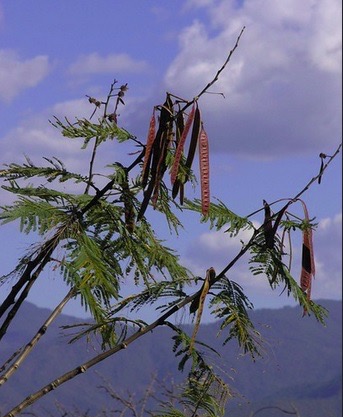
We went directly to the site named for the number of Guaje trees on the site, the one that has the long red bean-like pods with the beans inside.  We have tasted them before, and they are quite good, and are especially good when roasted.


Phil Weigand was the archeologist from the University of Arkansas who “discovered” and worked on the site for 40 years (he died in 2011), establishing its traditions and recreating the culture from the evidence in the area, called the “Teuchitlán tradition” by Weigand.  There is evidence of this tradition as early as 1000 BCE and it seems to have been replaced by around 500 AD, with the tradition flourishing from around 100 BCE to 350 AD with a potential population of around 40,000 people.

(1) CULTIVATION METHODS:  It seems these indigenous people came because of the lake and the amount of water in the area, a plus in the development of the “chinampa” method of cultivation they used.  In this method, they built up a massive number of large rectangular dirt squares surrounded by the water where they would grow corn and whatever else they needed.  The water was also a source of fish, and it was most likely a culture that fared well for nutrition.  These pictures came from the excellent museum on site, both from the photo descriptions and from the video.


(2) RELIGIOUS SIGNIFICANCE OF THE MOUNDS:  Beyond developing excellent methods of growing food, they also cultivated the site as a religious center.  The unique aspect of the site is that the tiered structures here are circular, not square as in many other locations.  There are two large circles that have been reconstructed according to the archeological evidence (The Great Guachi and The Iguana) and between the two is an elongated ball court, thought to be the largest court anywhere in Mesoamerica.  The third mound has no been recreated so we were able to climb up to the top and view the entire area from on high.  Circle 1 includes 12 platforms and is 125 meters across; circle 2 is 115 meters across and is surrounded by 10 evenly-spaced platforms which would have been the base for perishable buildings, perhaps covered by a thick layer of clay painted plaster.  The space between the 10 platforms and the circle was probably used for religious dancing.


A recreation of the dancing that would have been done between the mound and the platforms.
That’s the two of us with the Iguana Circle to our left and Mt. Tequila (a volcano) to the right in the background.
One of the platforms for the 10 equally-spaced buildings around the circle 

This is the third mound which has not been reconstructed.  We were able to walk up a little path to the top.  Stunning views.
The view from the top
These circles also had deep holes in the top that are suspected to be post holes; thus the ceremonies would have included a Flying Ritual in which a priest, tethered to the top, would simulate flight during ceremonies.

(3). THE BALL COURT:  Between the two large mounds is one of two ball courts on the site, and one of the courts is the largest ever found in Meso-America.  In this, the oldest ball game in MesoAmerica, players would hit the ball with their shoulders or their hips, and the game would often last all day.  To say “game,” however, is a bit of a misnomer because often, the winner was deemed to be chosen by the gods; thus, the loser would die.  Several of the bones found in the area indicate broken hips in the males.  Doesn’t sound like much fun!  Spectators, however, would watch, and presumably cheer, from the “stands” along the sides of the court.


The steps on the sides is where the spectators would sit


The museum itself was excellent and was shaped in the circular form of the mounds.  We started with a video, and then moved on to several of the exhibitions.  Some of the pictures from above were in the museum.  There was also a recreation of a tomb.
Multiple architectural aspects of the building, both inside and out, are recreations of the circles themselves 
A tomb found on site
Another notable fact of the area is that it contains the third largest deposit of obsidian anywhere in the world.  This volcanic rock would have been important for making arrowheads and other implements to improve their lives, including jewelry.

After visiting the site, we went to a delightful little lake-side restaurant, with the lake so close that it was actually encroaching on the restaurant floor.  The specialty of the house was frog-legs from frogs in the lake.  Julie enjoyed these huge delicacies which tasted sort of like — well, chicken.


We were all tired and did some sleeping on the way home.  It was a good day with beautiful weather after a rather chilly few days.